Encountering a deer while driving can be an incredibly nerve-wracking experience. For commercial motor vehicle (CMV) drivers, hitting one isn’t just a minor fender-bender; it’s a significant safety hazard that can lead to severe damage, injuries, and operational downtime. For fleet managers, these incidents raise insurance costs, create documentation headaches, and—depending on the circumstances—can impact a company’s safety profile.
This guide provides a comprehensive safety plan, turning a common roadside danger into a teachable moment. We’ll cover practical trucking deer strike prevention tips and the crucial post-accident protocol that every driver and safety manager must know.
Listen to the podcast to learn about how truck drivers can prevent deer strikes and protect their CSA scores.
Get the full podcast episode to listen offline:
What Happens and Why It Matters to Trucking Safety
The video transcript highlights an all-too-common scenario: a sudden wildlife encounter resulting in an impact. While deer strikes are often viewed as unavoidable “acts of nature,” the preparation and response are entirely within a carrier’s control.
Key Learning Points & Risks:
Timing is Everything: Deer are most active near dawn and dusk. These low-light periods are often when drivers are on the road, making vigilance and speed reduction critical.
High-Beam Advantage: Using high beams at night increases visibility and gives you more time to However, this must be balanced with the safety rule of dimming them when approaching other vehicles.
The Swerve Risk: The biggest danger to the driver and other vehicles is the instinctual urge to swerve abruptly. Swerving can lead to losing control of your truck or colliding with another vehicle, which is a far greater risk than a straight-on impact with the The safest maneuver is to break firmly and stay in your lane as best as possible.
The FMCSA/Regulatory Context and Vehicle Damage
While the FMCSA doesn’t have a specific regulation titled “Avoid Hitting Deer,” the core principles of safe operation are found in 49 CFR Part 392 – Driving of Commercial Motor Vehicles.
The General Rule: Safe Operation
FMCSA regulations require drivers to operate their CMVs with the utmost care and in a way that avoids accidents. Speeding in deer-crossing areas, not reducing speed at night, or failing to maintain alertness could technically fall under negligent operation.
Post-Accident Reporting
The FMCSA is primarily concerned with accidents that result in injury, death, or towing away a vehicle. Even though a deer strike isn’t a traffic accident in the traditional sense, if the truck is disabled and requires towing, or if the driver sustains an injury, it must be reported to the company and potentially to the police. This incident will be part of the company’s internal safety records and can be reviewed during a DOT compliance audit.
Outbound Link: Review the full definitions of “Accidents” under 49 CFR 390.5 on the FMCSA website for clarity on mandatory reporting:
How Trucking Companies and Drivers Should Respond
Preparation is the best defense. This section provides actionable advice for both drivers on the road and the safety staff supporting them.
Deer Strike Prevention Checklist (The Driver’s Drill)
To avoid hitting a deer, maintain cautious driving habits and situational awareness:
Slow Down and Stay Alert: One of the most effective ways to avoid hitting a deer is to maintain a reasonable speed and stay vigilant. Reduce your speed and keep an eye on the sides of the road.
Use High Beams at Night: Use your high beams whenever possible to increase visibility and reaction time.
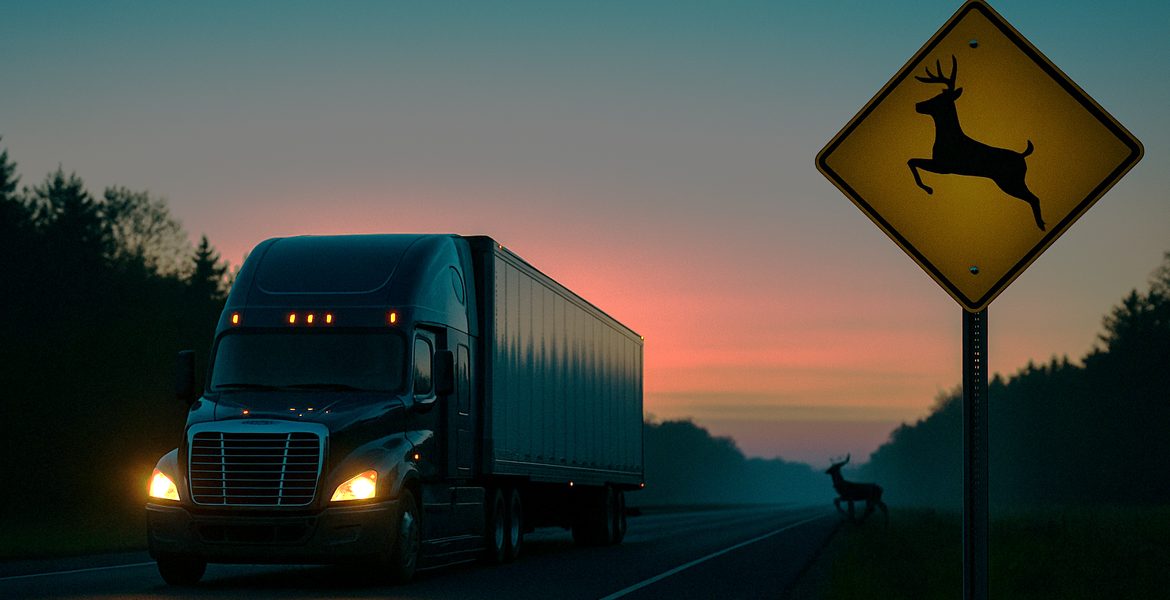
Seed Deer Crossing Signs: Pay close attention to these signs as they are placed in areas where deer are known to frequently cross. Slow down and be extra cautious in these areas.
Avoid Swerving: If a deer suddenly darts in front of your truck, resist the urge to swerve abruptly. Instead, brake firmly and stay in your lane.
Use Your Horn: Honking your horn can startle a deer and cause it to move away from the road. Give your horn a short, sharp blast to alert the animal.
- Be Wary of Groups: Deer often travel in groups, so if you see one deer on the road, be prepared for more to follow. Slow down and be extra cautious.
The Post-Accident Protocol (What to do after hitting a deer in a semi-truck)
If an impact occurs, every driver must follow a rigid, step-by-step procedure:
Secure the Scene Safely: If it’s safe to do so, pull over to the side of the road. Turn on your hazard lights and place your safety triangles to signal to other drivers.
Check for Injuries: This is the highest If you or anyone else is injured, call 911 immediately.
Assess Truck Damage (Caution First!): Inspect your truck for Even if the damage appears minimal, it’s essential to check for potential safety hazards like leaking fluids or damaged tires. Do not assume the truck is safe to continue; hidden damage can become apparent later on.
Contact Law Enforcement: Report the accident to local law enforcement. Inform them you’ve hit a deer; they can arrange for the removal of the deer’s carcass and provide a report for insurance purposes.
Document Everything: Take photos of the scene, including the deer and any damage to your truck. This documentation can be helpful when dealing with insurance claims.
Notify Your Company/Dispatcher: Notify your company of the crash as soon as possible. They can guide you through the incident and help assess the damage to your truck.
- Continue with Caution: If your truck is still operational, you can continue your trip, but you must remain cautious and monitor the vehicle, as hidden damage can become apparent later on.
Preventing deer strikes requires a combination of cautious driving habits and being prepared for these unexpected encounters. By staying alert, understanding when and where deer are active, and knowing the emergency steps to follow, you protect not only your freight and equipment but, most importantly, your own safety and the safety of others on the road.