
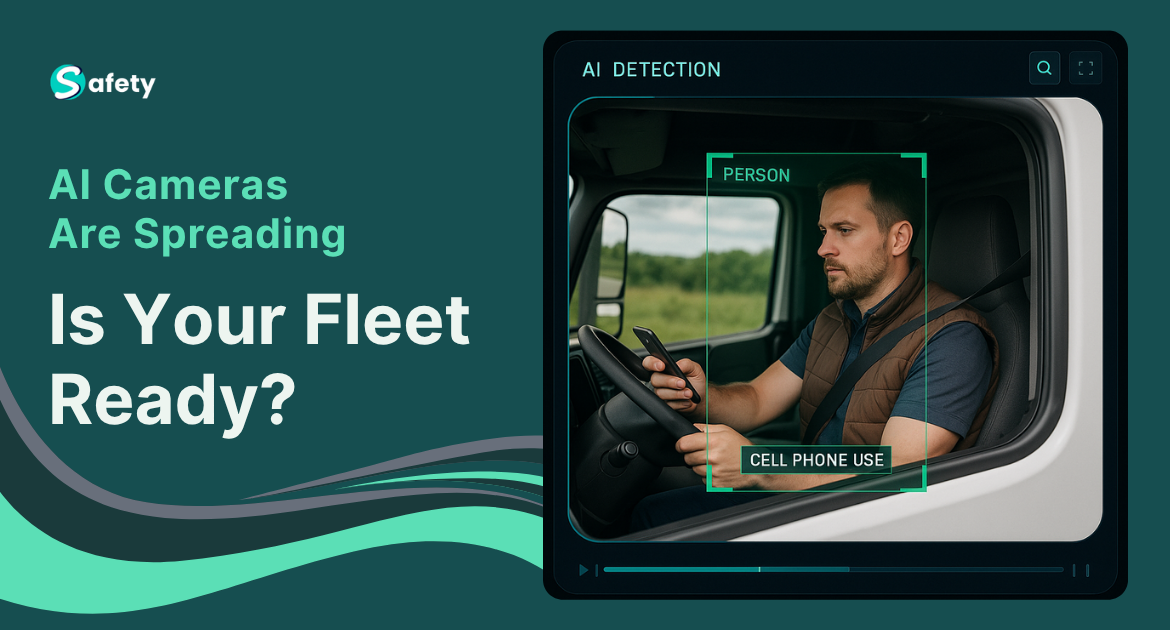
AI Cameras Are Watching. Is Your "Phone on the Lap" Habit Worth a $2,750 Fine?
Let’s paint a picture. A driver is rolling through a work zone on a state highway. Traffic is light. They grab their phone from the cup holder and rest it on their lap to check the map. It feels safe—their eyes are mostly on the road.
A few miles later, they’re surprised to see state patrol lights flash in the rearview. The trooper walks up and says, “Sir, I was alerted you were operating your commercial vehicle while holding your cell phone.”
How did they know? Welcome to the new reality of roadside enforcement.
This isn’t a “future” problem or an isolated test in one state. This technology is being actively piloted and deployed in over 20 U.S. states, including North Carolina, Minnesota, Georgia, and Arkansas. It’s a new, powerful tool for law enforcement, and it’s making it easier than ever to enforce the federal rules that all CDL drivers must already follow.
This article breaks down what’s happening nationwide, what the law actually says (hint: it’s the federal rule that matters most), and the exact playbook your fleet needs to adopt today.
Listen to the podcast to learn how roadside cellphone-detection technology is reshaping CDL enforcement—and how your fleet can stay ahead of it.
Get the full podcast episode to listen offline:
The New "Eyes on the Road": How AI Enforcement Tech Works
You may have heard of a system called “Heads-Up” by Acsensus, or similar technology. These systems are being mounted on trailers, overpasses, and work zone equipment across the country.
Here’s how it works and what it means for you:
AI Scans for Violations: The system uses high-resolution cameras and artificial intelligence to scan through the windshields of passing vehicles. It’s specifically trained to detect two things: a driver holding a cell phone and seat belt non-compliance.
Human Verification is Key: This is not a “robot ticket” system (in most current U.S. applications). The AI flags a potential violation and sends the image to a law enforcement officer stationed down the road.
Targeted Enforcement: The human officer reviews the image in real-time. If they confirm the violation, they have probable cause to pull the vehicle over and issue a citation.
In states like Minnesota, this tech has been used for targeted enforcement. In North Carolina, it has been used to focus specifically on commercial vehicle safety. The AI doesn’t write the ticket, but it acts as a perfect, tireless spotter for the human officer. It replaces the “random luck” of an officer happening to glance into your cab with a data-driven, highly accurate system.
The Law You're Already Breaking: State vs. Federal Rules
This is the most critical part of the conversation. Many drivers get confused by the patchwork of state laws, but for a CDL holder, the federal rule is what matters most.
The Confusing “Patchwork” of State Laws
The rules change every time you cross a state line. Some states have a full, primary “hands-free” law (meaning an officer can pull you over just for holding a phone). Other states only have a “texting-only” ban, which may be a secondary offense (meaning they need another reason, like speeding, to stop you).
This patchwork is a major compliance headache. You can see a full breakdown of the different state laws on the Governors Highway Safety Association (GHSA) website.
But for commercial drivers, this state-level debate is a distraction. Why? Because you are already held to a higher, federal standard.
The Most Important Rule: The Federal (FMCSA) Law for All CDL Drivers
This is the one that matters. 49 CFR § 392.82 is the FMCSA’s “Using a hand-held mobile telephone” rule. It applies to ALL CDL drivers, in ALL states, at ALL times.
The FMCSA rule strictly forbids:
Holding a phone to make or receive a call
Using more than a single button to dial, answer, or end a call (this makes your “phone on the lap” GPS check illegal).
Reaching for a device in a way that requires you to move out of a safe, seated, and belted position.
- Texting (which is covered under 80).
The new AI cameras are not looking for “texting.” They are looking for “phone in hand”—a clear violation of the federal rule you must already follow.
The Federal Penalties are Severe:
For Drivers: Fines up to $2,750 per offense.
For Carriers: Fines up to $11,000 for “allowing or requiring” drivers to use hand-held devices.
On Your CSA Score: This is a 10-point violation in the “Unsafe Driving” BASIC—the same as reckless driving or speeding 15+ mph over the limit.
- Disqualification: Multiple violations of this rule will result in driver disqualification for 60 or 120 days.
The takeaway is simple: The AI camera isn’t creating a new violation; it’s just a new, highly effective tool to enforce the serious federal rule you’re already supposed to be following.
Your Fleet's Hands-Free Compliance Playbook
This technology is spreading. The “cat-and-mouse game” of hiding a phone when you see a patrol car is over. It’s time to build a 100% compliant culture.
For Safety Managers & Fleet Owners:
Adopt a “Stricter Than the Law” Policy: Your company policy should be simple: “No hand-held or lap-held device use. Period.” All devices must be in a secure, dash- or window-mounted cradle.
Train, Train, and Re-Train: Don’t assume drivers know the specifics of 392.82. Use this article as training material. Hold a 10-minute quarterly safety meeting on it. Get a signed acknowledgment from every driver.
Use Your Telematics: Configure your ELD or telematics system to flag distracted driving behaviors (like harsh braking or swerving) and coach drivers on the data. Use it as a training tool, not just a “gotcha” tool.
- Promote the Right Equipment: Make sure your cabs are set up for success. Provide high-quality, secure phone mounts and ensure Bluetooth headsets are available and working.
For Professional CDL Drivers:
Mount It Before You Move It: Your phone goes into a secure, hands-free mount before you put the truck in gear.
Preset and Park: Your navigation should be set before you start your trip. If you need to make a call or change a destination, pull over in a safe, legal location.
No Hand, No Lap, No Exceptions: Resting the phone on your lap or holding it to check a map is a violation. It’s that simple.
- Know Your Rights (and Wrongs): If you are pulled over, be professional. Provide your license, registration, and insurance. Do not argue with the officer on the roadside. Report the stop to your safety department immediately.
The Bottom Line: The Warning Shot Has Been Fired
This nationwide trend is a warning shot for the entire industry. Distracted driving is a top priority for the NHTSA, FMCSA, and state patrols. They now have advanced technology to enforce the rules that have been on the books for years.
This isn’t about beating the cameras. It’s about eliminating the risk entirely. A single 10-point CSA violation can damage a carrier’s score, raise insurance premiums, and put a driver’s career at risk.
A culture of 100% hands-free compliance is no longer optional. It’s the only way to protect your drivers, your company, and everyone else on the road.